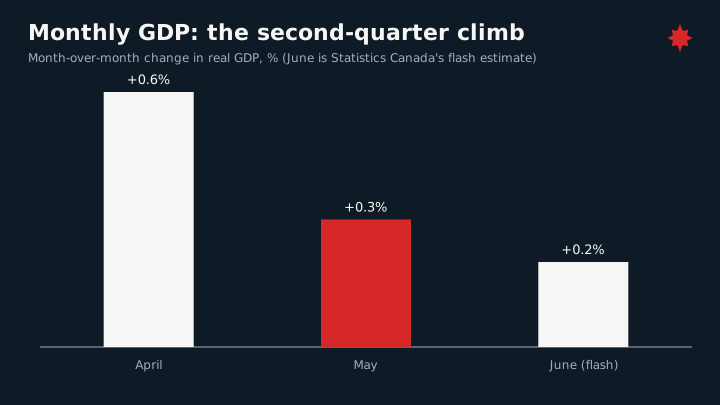
Canada's economy grew 0.3% in May, beating the 0.2% consensus and setting up a second quarter that looks like the country's best in more than three years. Statistics Canada also nudged April's gain up to 0.6% from 0.5%, the largest monthly increase since the summer of 2025, and its flash reading for June pointed to a further 0.2% advance.
Put together, those three months imply annualized second-quarter growth of about 3.4%. That is far ahead of the 2.5% the Bank of Canada projected in its July 15 decision, and it would be the strongest quarterly print since the 4.3% pace recorded in the first three months of 2023.
The recession scare of the spring now looks like noise rather than signal.
The turnaround matters because the economy had shrunk in both the fourth quarter of 2025 and the first quarter of 2026, the textbook definition of a technical recession. Economists spent much of the spring debating whether the country had slipped into a genuine downturn. May's data suggest that the earlier weakness was overstated: growth was broad, with 13 of 20 industrial sectors expanding, led by oil and gas extraction, manufacturing and construction.
Not everyone is ready to declare victory. Monthly GDP is heavily revised, and the official expenditure-based estimate for the second quarter will not arrive until the end of August. Some of the quarter's strength also reflects a rebound in auto output after winter disruptions, a boost that will not repeat. Still, the direction is clear enough that talk of recession has largely faded from bank research notes.
For the central bank, the numbers reinforce the case for standing pat. Growth is resilient enough to remove any argument for more rate relief, while core inflation near target and a soft labour market give no reason to tighten. Its next decision, on September 2, will come just days after the full quarterly release.